
Written by masharu and Jennifer Plein
“Soils significantly influence a variety of functions […] that sustains the human population. Through ingestion (either deliberate or involuntary), inhalation and dermal absorption, the mineral, chemical and biological components of soils can either be directly beneficial or detrimental to human health.” (Abrahams, 2002)
Soil is the lifeforce of the earth, it is nutritionally rich not just literally with its minerals and microorganisms but also metaphorically, packed with cultural stories and histories. However, currently, it is an exploited resource in the unsustainable linear economy.
Geophagy – eating and loving earth
Geophagy is the practice of eating earth, soil and soil-like substances, such as clay and chalk. Since ancient times, people have practised this surrounding beliefs in the sacredness of the earth. The importance of touching or eating earth is present in many cultures and regardless of religion and country, the earth holds an embodiment of nature. It often symbolises life-giving forces, fertility and the continuity of lineage. In some places eating earth can be seen as a spiritual practice of reconnecting with one’s origins, with oneself, and with an invigorating power. In many communities in the contemporary world as well as historically geophagy has medicinal, as well as food supplementation functions (Johns et al., 1991).
Regardless of the strong connection to the land, contemporary Western cultures hardly hold the earth in high esteem. In American English, expressions such as ‘dirty’, ‘dirt poor’, ‘dirt cheap’, and ‘dirtbag’ refer to undesirable things or people, as do other earth-related terms such as ‘soiled’, ‘muddy’, ‘mudslinging’, and ‘muck’. If the ‘salt of the earth’ is the best, the worst food “tastes like dirt. In addition, phrases like ‘dirt-poor’, ‘soiled’, ‘old as dirt’, and ‘dirty minded’ are also widespread” (Henry et al., 2012; Brevik et al., 2010) whilst in Europe and the USA, geophagy was simultaneously considered a cultural tradition. At the moment, it is officially regarded as a psychological disorder, known as pica, which is included in DSM – Diagnostic and Statistical Manual of Mental Disorders. (American Psychiatric Association, 2022)
Eating earth in Amsterdam
Amsterdammers practice various types of earth eating. A research by Dutch Food Authority (Reeuwijk et al., 2013) describes how edible clays were sampled on the Dutch market and examined. The study focuses on both traditional and health clays. Traditional clays are usually sold in cultural shops, such as Toko’s, Surinames and African stores, and the information about these clays is scarce, there is often no labelling and packaging. Health clays are generally marketed as food supplements, they are well packed and labelled, and can be found in health shops, such as Ecoplaza, and web shops. The authors point out that the use of traditional and health clays should be discouraged since these products are unregulated and can damage health due to their toxicity. It is remarkable that none of the edible 63 clays collected by the Food Authorities in the Dutch market originate from the Dutch ground, but mostly had colonial history and context.
In the research by the Dutch Food Authority 26 out of the 63 edible clay samples originate from Suriname, and are known in Pemba or Pimba or Pemba dotti. Pemba is a special clay deeply rooted in the culture and traditions of the Afro-Surinamese community. Pemba is more than just clay, it is used in Winti religion and carries a rich symbolic meaning that takes us back to its origins.
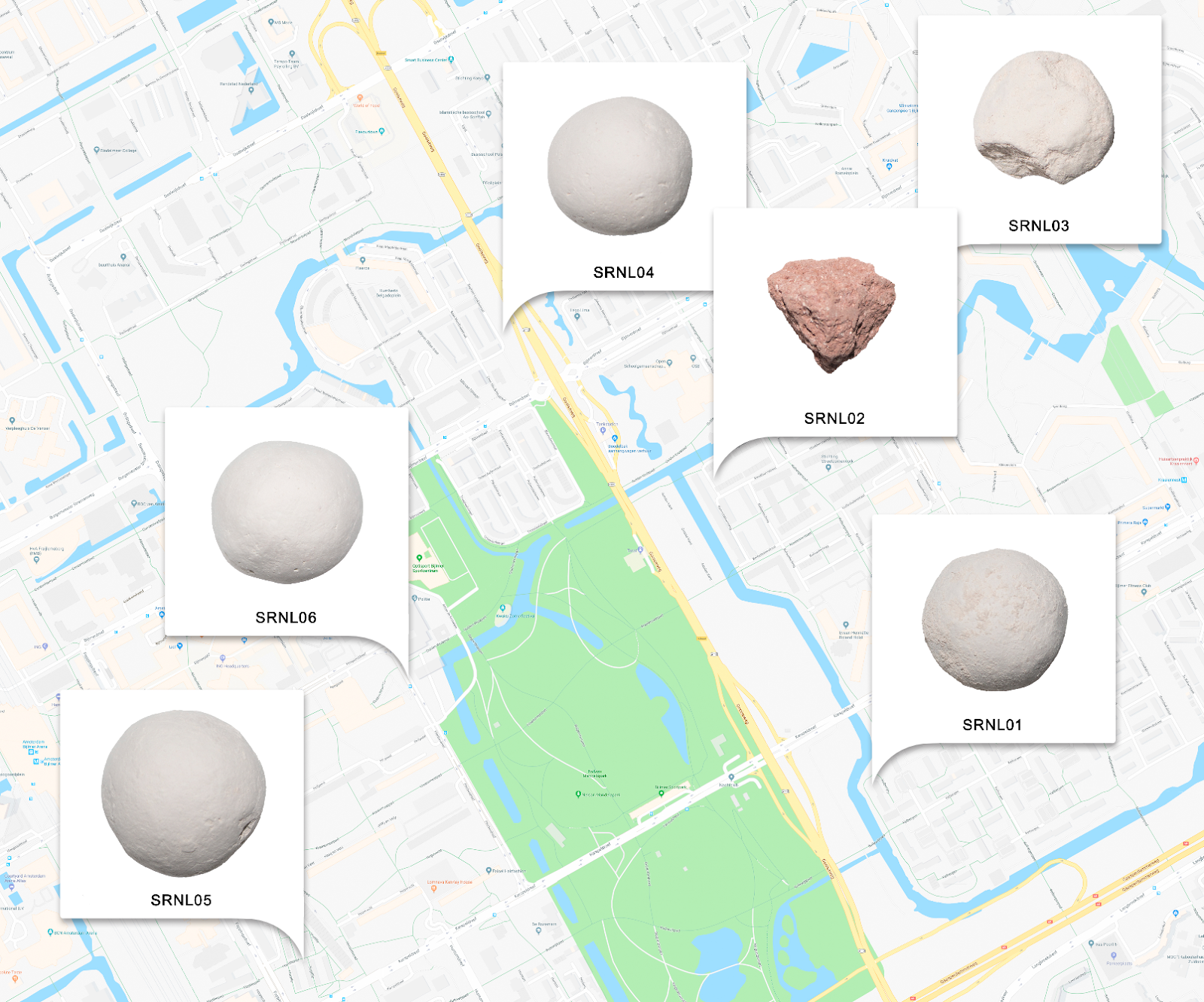
Pemba
Let’s begin with the legend of Pemba, a story that lends its magic and meaning to this special clay. Pemba is a thick chalk mined in the African mountains of Kabanda. It was used to cover faces and bodies before going into battle. This was not only a way to intimidate enemies but also to invoke the power of ancestors.
A young girl, Pemba, the daughter of an important chief, had to remain a virgin to be sacrificed to the gods. However, when a stranger entered the village and developed a bond with her. When her father discovered it, he ordered the stranger to be killed. Pemba, heartbroken, covered herself with the white chalk, thereby declaring war on her father. This unusual act had an unexpected effect; instead of becoming incensed, her father calmed down and accepted his daughter’s loving relationship. This moment marks the discovery of Pemba’s miraculous properties, which are now also seen as a source of love and peace, as well as the power to make important life wishes come true.
In the Afro-Surinamese community, Pemba is used in various ways. Rather than driving away the dead, this clay helps humans become one with them. Whitening bodies with Pemba dotti keeps humans to get in tune with the spirits, and thus connect with ancestors for help and advice. This clay is also applied to musical instruments used to invoke Winti, strengthening their connection to the spiritual world. Many people have a strong connection to this clay, and stories about eating it resonate throughout the community. Also, almost every cultural Surinamese shop in Amsterdam trades Pemba. Since the investigation of Dutch Food Authorities some of those shops received fines, but they still continue to sell Pemba.
Cooking earth
In 2025 we organised a dinner cooked with earth in a community space Lola Lieven in Amsterdam West. We used Pemba along with earth coming from different places. The recipes are provided below. Would it be possible one day to use Amsterdam land for cooking and eating? Or is it too polluted, and this is how it is going to stay? Can we only rely on earth from other parts of the world to maintain our livelihood here?
If you get inspired by our recipes below and decide to cook something with the native land of Amsterdam and eat it, please, share your photos and recipes with us. We would love to taste some of the soil you used. Get in touch: [email protected]
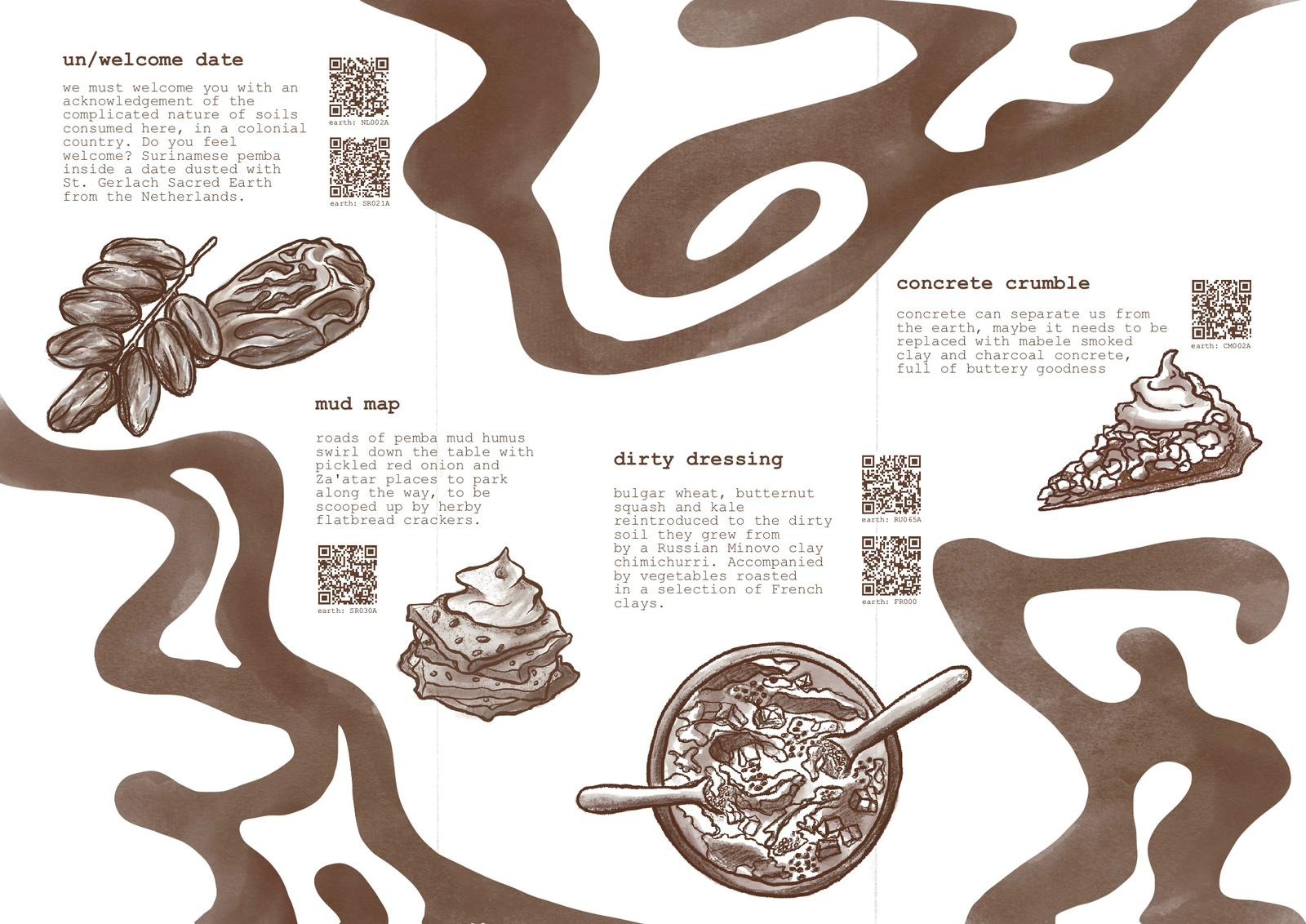
Menu with Pemba and other earth samples. Dinner in Lola Lieven, Amsterdam West, 2025. Dinner designed by masharu studio (masharu, Hannah Murphy, Nika Brzezicka, and Ruby McHale) in collaboration with Waste to Success, Jennifer Plein and Lola Lieven.
References
Abrahams, P. W. 2002. Soils: their implications to human health. Science of the Total Environment. 291: 1–32.
Johns, T., and Duquette, M. 1991. Detoxification and mineral supplementation as functions of geophagy. American Journal of Clinical Nutrition. 53(2): 448–456.
Henry, J. M., and Cring, F. D. 2012. Geophagy: an anthropological perspective. 185.
Brevik, E. C., and Hartemink, A. E. 2010. History, philosophy, and sociology of soil science. In: Verheye, W. (Ed.), Soils, Plant Growth and Crop Production. Encyclopedia of Life Support Systems (EOLSS). 21.
American Psychiatric Association. 2022. Diagnostic and Statistical Manual of Mental Disorders (5th ed., text rev.).
Reeuwijk, N. M., Klerx, W. N., Kooijman, M., Hoogenboom, L. A., Rietjens, I. M., and Martena, M. J. 2013. Levels of lead, arsenic, mercury and cadmium in clays for oral use on the Dutch market and estimation of associated risks. Food Additives & Contaminants Part A: Chemistry, Analysis, Control, Exposure & Risk Assessment. 30(9): 1535–1545.